
Articles | Volume 21, issue 6
https://doi.org/10.5194/os-21-3265-2025
© Author(s) 2025. This work is distributed under
the Creative Commons Attribution 4.0 License.
the Creative Commons Attribution 4.0 License.
https://doi.org/10.5194/os-21-3265-2025
© Author(s) 2025. This work is distributed under
the Creative Commons Attribution 4.0 License.
the Creative Commons Attribution 4.0 License.
Research article
| 
02 Dec 2025
Research article |
| 02 Dec 2025
| 02 Dec 2025
Enhancing coastal winds and surface ocean currents with deep learning for short-term wave forecasting
Manuel García-León
CORRESPONDING AUTHOR
Nologin Oceanic Weather Systems SLU, Santiago de Compostela, 15705, Spain
José María García-Valdecasas
Nologin Oceanic Weather Systems SLU, Santiago de Compostela, 15705, Spain
Lotfi Aouf
Meteo-France, Departement Marine et Oceanographie, Toulouse, 31100, France
Alice Dalphinet
Meteo-France, Departement Marine et Oceanographie, Toulouse, 31100, France
Juan Asensio
Nologin Oceanic Weather Systems SLU, Santiago de Compostela, 15705, Spain
Stefania Angela Ciliberti
Nologin Oceanic Weather Systems SLU, Santiago de Compostela, 15705, Spain
Breogán Gómez
Nologin Oceanic Weather Systems SLU, Santiago de Compostela, 15705, Spain
Víctor Aquino
Nologin Oceanic Weather Systems SLU, Santiago de Compostela, 15705, Spain
Roland Aznar
Nologin Oceanic Weather Systems SLU, Santiago de Compostela, 15705, Spain
Marcos Sotillo
Nologin Oceanic Weather Systems SLU, Santiago de Compostela, 15705, Spain
Related authors
No articles found.
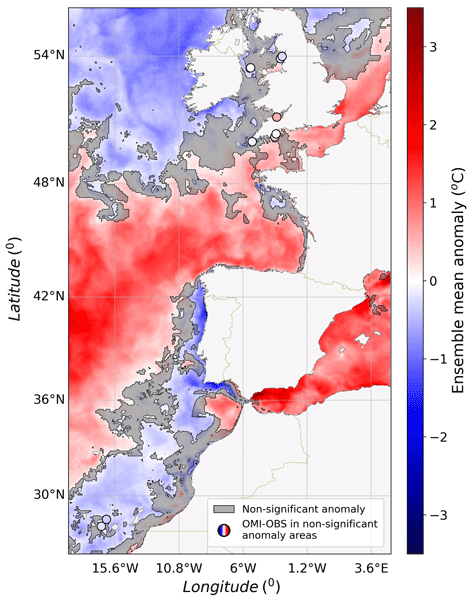
Álvaro de Pascual Collar, Axel Alonso Valle, Alex Gallardo, Marta de Alfonso Alonso-Muñoyerro, Begoña Pérez Gómez, Stefania Ciliberti, and Marcos G. Sotillo
State Planet, 7-osr10, 7, https://doi.org/10.5194/sp-7-osr10-7-2026, https://doi.org/10.5194/sp-7-osr10-7-2026, 2026
Short summary
Short summary
This study improves the monitoring of extreme sea surface temperature events in the Iberia–Biscay–Ireland region. We tested new data sources and combined information from different models and satellites to provide more consistent results and characterize inter-product spread. The findings show that these methods make the indicator more reliable and useful for supporting climate and ocean management decisions.
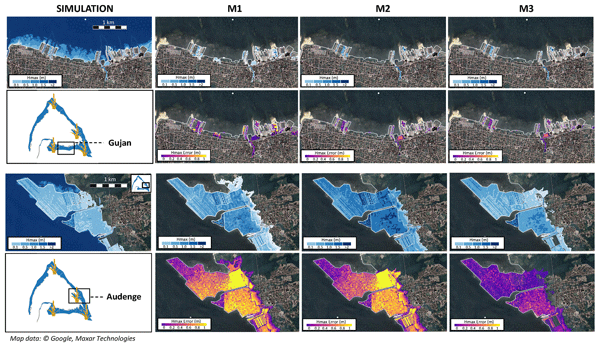
Sophie Lecacheux, Jeremy Rohmer, Eva Membrado, Rodrigo Pedreros, Andrea Filippini, Deborah Idier, Servane Gueben-Vénière, Denis Paradis, Alice Dalphinet, and David Ayache
Nat. Hazards Earth Syst. Sci., 26, 3919–3942, https://doi.org/10.5194/nhess-26-3919-2026, https://doi.org/10.5194/nhess-26-3919-2026, 2026
Short summary
Short summary
This study comparer three data-driven methodologies to overcome the computational burden of numerical simulations for early warning purpose. They are all based on the statistical analysis of pre-calculated databases, to downscale total sea levels and predict marine flooding maps from offshore metocean forecasts. Conclusions highlight the relevance of metamodel-based approaches for fast prediction and the added value of precalculated databases during the prepardness phase.
Simona Masina, Andrea Cipollone, Doroteaciro Iovino, Stefania Ciliberti, Rita Lecci, Sergio Cretí, Vladyslav Lyubartsev, Giovanni Coppini, and Emanuela Clementi
EGUsphere, https://doi.org/10.5194/egusphere-2026-887, https://doi.org/10.5194/egusphere-2026-887, 2026
Short summary
Short summary
The paper presents GOFS16, an eddy-resolving global operational ocean and sea ice forecasting system which provides 6-day forecasts of three-dimensional temperature, salinity, currents, sea level, and sea ice properties. The system assimilates satellite and in situ observations using a 3D variational data assimilation scheme. Validation is conducted routinely using global and regional metrics. Results indicate that GOFS16 performs within the expected range of skill for current global systems.
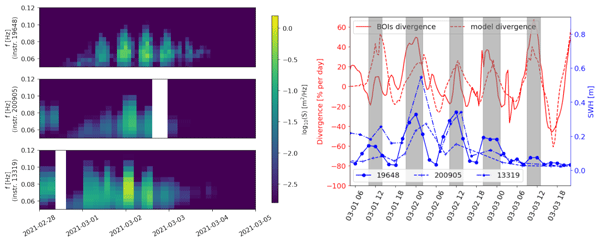
Jean Rabault, Trygve Halsne, Ana Carrasco, Anton Korosov, Joey Voermans, Patrik Bohlinger, Jens Boldingh Debernard, Malte Müller, Øyvind Breivik, Takehiko Nose, Gaute Hope, Fabrice Collard, Sylvain Herlédan, Tsubasa Kodaira, Nick Hughes, Qin Zhang, Kai Håkon Christensen, Alexander Babanin, Lars Willas Dreyer, Cyril Palerme, Lotfi Aouf, Konstantinos Christakos, Atle Jensen, Johannes Röhrs, Aleksey Marchenko, Graig Sutherland, Trygve Kvåle Løken, and Takuji Waseda
The Cryosphere, 19, 6229–6260, https://doi.org/10.5194/tc-19-6229-2025, https://doi.org/10.5194/tc-19-6229-2025, 2025
Short summary
Short summary
We observe strongly modulated waves-in-ice significant wave height using buoys deployed East of Svalbard. We show that these observations likely cannot be explained by wave-current interaction or tide-induced modulation alone. We also demonstrate a strong correlation between the waves height modulation, and the rate of sea ice convergence. Therefore, our data suggest that the rate of sea ice convergence and divergence may modulate wave in ice energy dissipation.

Jennifer Veitch, Enrique Alvarez-Fanjul, Arthur Capet, Stefania Ciliberti, Mauro Cirano, Emanuela Clementi, Fraser Davidson, Ghada el Serafy, Guilherme Franz, Patrick Hogan, Sudheer Joseph, Svitlana Liubartseva, Yasumasa Miyazawa, Heather Regan, and Katerina Spanoudaki
State Planet, 5-opsr, 6, https://doi.org/10.5194/sp-5-opsr-6-2025, https://doi.org/10.5194/sp-5-opsr-6-2025, 2025
Short summary
Short summary
Ocean forecast systems provide information about a future state of the ocean. This information is provided in the form of decision support tools, or downstream applications, that can be accessed by various stakeholders to support livelihoods, coastal resilience and the good governance of the marine environment. This paper provides an overview of the various downstream applications of ocean forecast systems that are utilized around the world.
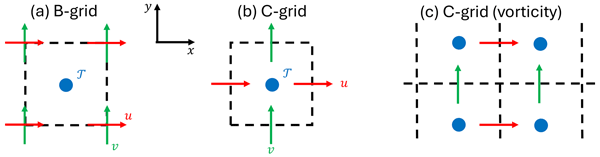
Michael J. Bell, Andreas Schiller, and Stefania Ciliberti
State Planet, 5-opsr, 10, https://doi.org/10.5194/sp-5-opsr-10-2025, https://doi.org/10.5194/sp-5-opsr-10-2025, 2025
Short summary
Short summary
We provide an introduction to physical ocean models, at elementary and intermediate levels, describing the properties they represent, the principles and equations they use to evolve these properties, the physical phenomena they simulate, and the wider context and prospects for their further development. We also outline, at a more technical level, the methods and approximations that they use and the difficulties that limit their accuracy or reliability.
Fabrice Hernandez, Marcos Garcia Sotillo, and Angélique Melet
State Planet, 5-opsr, 17, https://doi.org/10.5194/sp-5-opsr-17-2025, https://doi.org/10.5194/sp-5-opsr-17-2025, 2025
Short summary
Short summary
An historical review over the last 3 decades on intercomparison projects of ocean numerical reanalysis or forecast is first proposed. From this, main issues and lessons learned are discussed in order to propose an overview of best practices and key considerations to facilitate intercomparison activities in operational oceanography.
Yann Drillet, Matthew Martin, Yosuke Fujii, Eric Chassignet, and Stefania Ciliberti
State Planet, 5-opsr, 2, https://doi.org/10.5194/sp-5-opsr-2-2025, https://doi.org/10.5194/sp-5-opsr-2-2025, 2025
Short summary
Short summary
This article describes the various stages of research and development that have been carried out over the last few decades to produce an operational reference service for global ocean monitoring and forecasting.
Stefania Ciliberti and Gianpaolo Coro
State Planet, 5-opsr, 24, https://doi.org/10.5194/sp-5-opsr-24-2025, https://doi.org/10.5194/sp-5-opsr-24-2025, 2025
Short summary
Short summary
This review explores how cloud computing technology and its foundational concepts can enhance operational forecasting with scalable, flexible, and measurable resources. It highlights its benefits for the ocean value chain in support of ocean data management, forecasting system infrastructure, data analysis, visualization of ocean forecasts, dissemination, and outreach, showcasing real-world initiatives from the weather and ocean community.
Marcos Garcia Sotillo, Marie Drevillon, and Fabrice Hernandez
State Planet, 5-opsr, 16, https://doi.org/10.5194/sp-5-opsr-16-2025, https://doi.org/10.5194/sp-5-opsr-16-2025, 2025
Short summary
Short summary
Operational forecasting systems require best practices for assessing the quality of ocean products. The authors discuss the role of the observing network in performing validation of ocean models, identifying current gaps but also emphasizing the need of new metrics. An analysis on the level of maturity of validation processes from global to regional systems is provided. A rich variety of approaches exists. An example is provided of how the Copernicus Marine Service organizes product quality information.
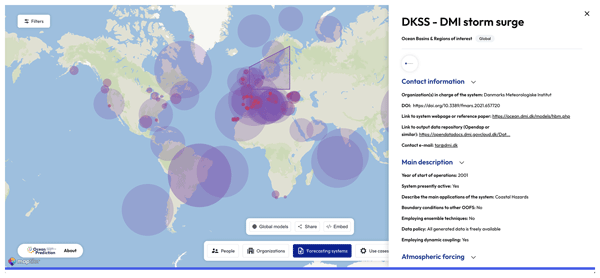
Mauro Cirano, Enrique Alvarez-Fanjul, Arthur Capet, Stefania Ciliberti, Emanuela Clementi, Boris Dewitte, Matias Dinápoli, Ghada El Serafy, Patrick Hogan, Sudheer Joseph, Yasumasa Miyazawa, Ivonne Montes, Diego A. Narvaez, Heather Regan, Claudia G. Simionato, Gregory C. Smith, Joanna Staneva, Clemente A. S. Tanajura, Pramod Thupaki, Claudia Urbano-Latorre, Jennifer Veitch, and Jorge Zavala Hidalgo
State Planet, 5-opsr, 5, https://doi.org/10.5194/sp-5-opsr-5-2025, https://doi.org/10.5194/sp-5-opsr-5-2025, 2025
Short summary
Short summary
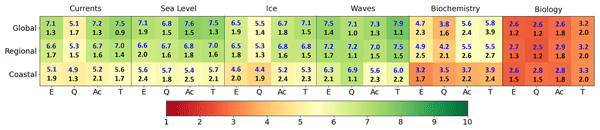
Operational ocean forecasting systems (OOFSs) are crucial for human activities, environmental monitoring, and policymaking. An assessment across eight key regions highlights strengths and gaps, particularly in coastal and biogeochemical forecasting. AI offers improvements, but collaboration, knowledge sharing, and initiatives like the OceanPrediction Decade Collaborative Centre (DCC) are key to enhancing accuracy, accessibility, and global forecasting capabilities.
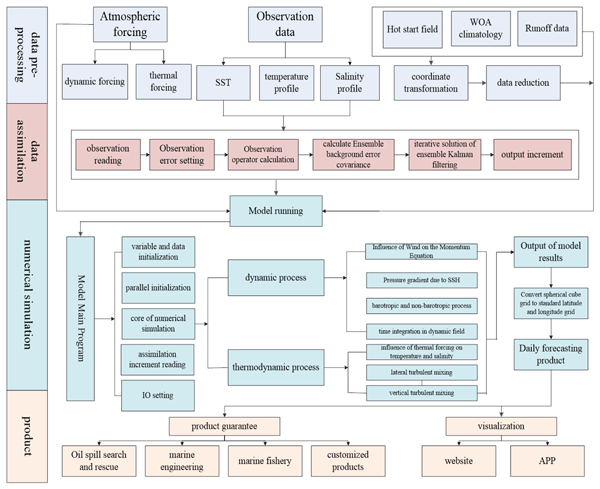
Liying Wan, Marcos Garcia Sotillo, Mike Bell, Yann Drillet, Roland Aznar, and Stefania Ciliberti
State Planet, 5-opsr, 15, https://doi.org/10.5194/sp-5-opsr-15-2025, https://doi.org/10.5194/sp-5-opsr-15-2025, 2025
Short summary
Short summary
Operating the ocean value chain requires the implementation of steps that must work systematically and automatically to generate ocean predictions and deliver this information. The paper illustrates the main challenges foreseen by operational chains in integrating complex numerical frameworks from the global to coastal scale and discusses existing tools that facilitate orchestration, including examples of existing systems and their capacity to provide high-quality and timely ocean forecasts.
Patrick Heimbach, Fearghal O'Donncha, Timothy A. Smith, Jose Maria Garcia-Valdecasas, Alain Arnaud, and Liying Wan
State Planet, 5-opsr, 22, https://doi.org/10.5194/sp-5-opsr-22-2025, https://doi.org/10.5194/sp-5-opsr-22-2025, 2025
Short summary
Short summary
Operational ocean prediction relies on computationally expensive numerical models and complex workflows, known as data assimilation, in which models are fit to observations to produce optimal initial conditions for prediction. Machine learning has the potential to vastly accelerate ocean prediction, improve uncertainty quantification through massive surrogate model-based ensembles, and render simulations more accurate through better model calibration. We review the developments and challenges.
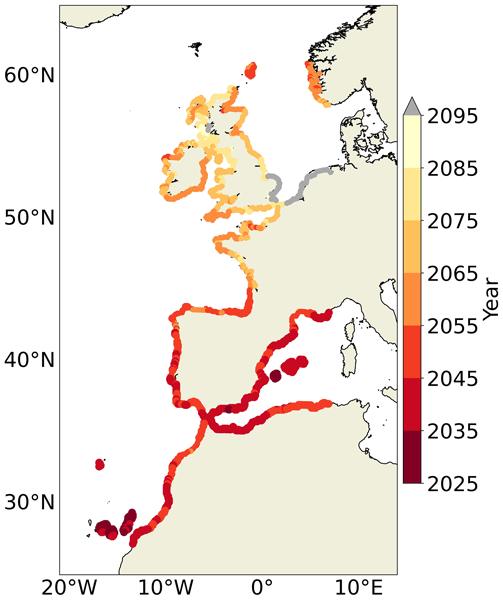
Alisée A. Chaigneau, Angélique Melet, Aurore Voldoire, Maialen Irazoqui Apecechea, Guillaume Reffray, Stéphane Law-Chune, and Lotfi Aouf
Nat. Hazards Earth Syst. Sci., 24, 4031–4048, https://doi.org/10.5194/nhess-24-4031-2024, https://doi.org/10.5194/nhess-24-4031-2024, 2024
Short summary
Short summary
Climate-change-induced sea level rise increases the frequency of extreme sea levels. We analyze projected changes in extreme sea levels for western European coasts produced with high-resolution models (∼ 6 km). Unlike commonly used coarse-scale global climate models, this approach allows us to simulate key processes driving coastal sea level variations, such as long-term sea level rise, tides, storm surges induced by low atmospheric surface pressure and winds, waves, and their interactions.
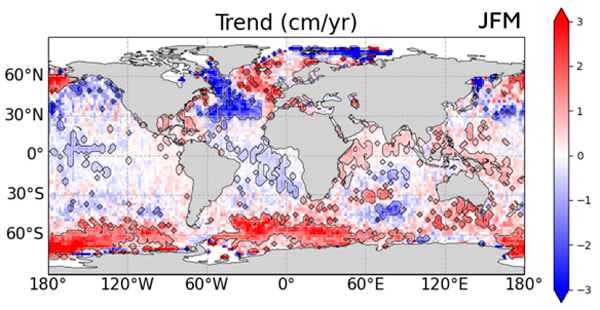
Alice Laloue, Malek Ghantous, Yannice Faugère, Alice Dalphinet, and Lotfi Aouf
State Planet, 4-osr8, 6, https://doi.org/10.5194/sp-4-osr8-6-2024, https://doi.org/10.5194/sp-4-osr8-6-2024, 2024
Short summary
Short summary
Satellite altimetry shows that daily mean significant wave heights (SWHs) and extreme SWHs have increased in the Southern Ocean, the South Atlantic, and the southern Indian Ocean over the last 2 decades. In winter in the North Atlantic, SWH has increased north of 45°N and decreased south of 45°N. SWHs likely to be exceeded every 100 years have also increased in the North Atlantic and the eastern tropical Pacific. However, this study also revealed the need for longer and more consistent series.
Álvaro de Pascual Collar, Roland Aznar, Bruno Levier, and Marcos García Sotillo
State Planet, 4-osr8, 5, https://doi.org/10.5194/sp-4-osr8-5-2024, https://doi.org/10.5194/sp-4-osr8-5-2024, 2024
Short summary
Short summary
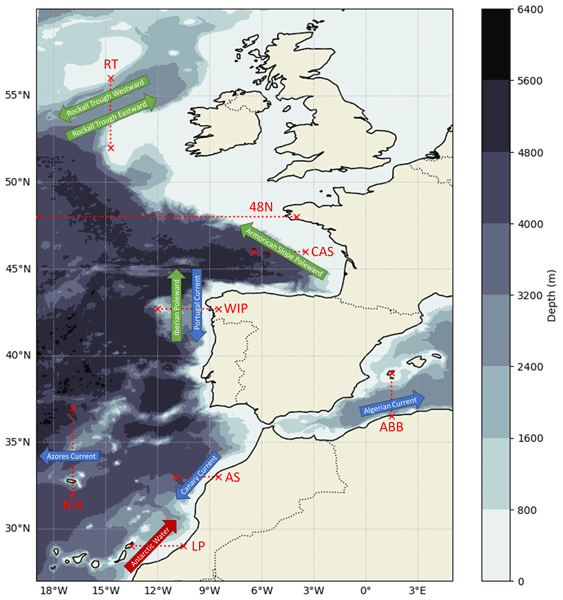
The Iberia–Biscay–Ireland region in the North Atlantic has diverse ocean currents impacting upper and deeper layers. These currents are vital for heat transport, species dispersion, and sediment and pollutant movement. Monitoring them is crucial for informed decision-making in ocean-related activities, including the blue economy sector. This study introduces an indicator to track these currents, covering main ones like the Azores, Canary, Portugal, and poleward slope currents.
Stefania A. Ciliberti, Enrique Alvarez Fanjul, Jay Pearlman, Kirsten Wilmer-Becker, Pierre Bahurel, Fabrice Ardhuin, Alain Arnaud, Mike Bell, Segolene Berthou, Laurent Bertino, Arthur Capet, Eric Chassignet, Stefano Ciavatta, Mauro Cirano, Emanuela Clementi, Gianpiero Cossarini, Gianpaolo Coro, Stuart Corney, Fraser Davidson, Marie Drevillon, Yann Drillet, Renaud Dussurget, Ghada El Serafy, Katja Fennel, Marcos Garcia Sotillo, Patrick Heimbach, Fabrice Hernandez, Patrick Hogan, Ibrahim Hoteit, Sudheer Joseph, Simon Josey, Pierre-Yves Le Traon, Simone Libralato, Marco Mancini, Pascal Matte, Angelique Melet, Yasumasa Miyazawa, Andrew M. Moore, Antonio Novellino, Andrew Porter, Heather Regan, Laia Romero, Andreas Schiller, John Siddorn, Joanna Staneva, Cecile Thomas-Courcoux, Marina Tonani, Jose Maria Garcia-Valdecasas, Jennifer Veitch, Karina von Schuckmann, Liying Wan, John Wilkin, and Romane Zufic
State Planet, 1-osr7, 2, https://doi.org/10.5194/sp-1-osr7-2-2023, https://doi.org/10.5194/sp-1-osr7-2-2023, 2023
Álvaro de Pascual-Collar, Roland Aznar, Bruno Levier, and Marcos García-Sotillo
State Planet, 1-osr7, 9, https://doi.org/10.5194/sp-1-osr7-9-2023, https://doi.org/10.5194/sp-1-osr7-9-2023, 2023
Short summary
Short summary
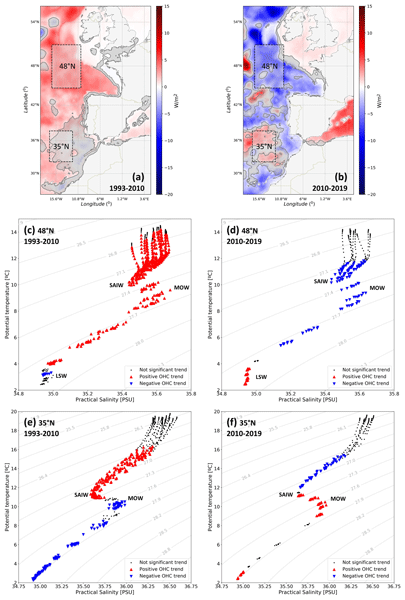
The article comprises the analysis of the ocean heat content in the northeastern Atlantic Iberian–Biscay–Ireland (IBI) region. The variability of ocean heat content is studied, and results are linked with the variability of the main water masses found in the region. Results show how the coupled interannual variability of water masses accounts for an important part of the total ocean heat content variability in the region.
Alisée A. Chaigneau, Stéphane Law-Chune, Angélique Melet, Aurore Voldoire, Guillaume Reffray, and Lotfi Aouf
Ocean Sci., 19, 1123–1143, https://doi.org/10.5194/os-19-1123-2023, https://doi.org/10.5194/os-19-1123-2023, 2023
Short summary
Short summary
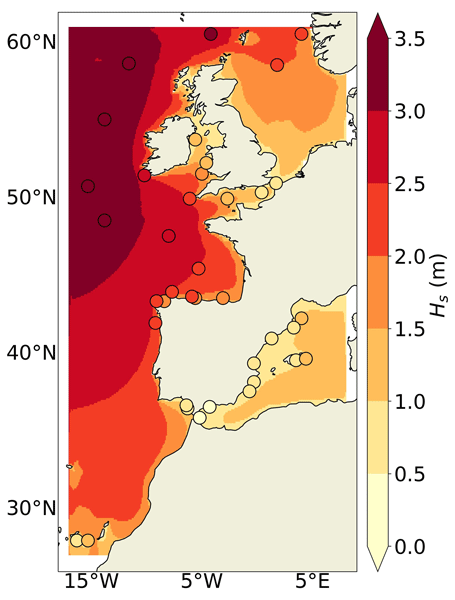
Wind waves and swells are major drivers of coastal environment changes and can drive coastal marine hazards such as coastal flooding. In this paper, by using numerical modeling along the European Atlantic coastline, we assess how present and future wave characteristics are impacted by sea level changes. For example, at the end of the century under the SSP5-8.5 climate change scenario, extreme significant wave heights are higher by up to +40 % due to the effect of tides and mean sea level rise.
Cited articles
Alday, M., Accensi, M., Ardhuin, F., and Dodet, G.: A global wave parameter database for geophysical applications. Part 3: improved forcing and spectral resolution, Ocean Modelling, 166, 101848, https://doi.org/10.1016/j.ocemod.2021.101848, 2021.
Aouf, L. and Lefèvre, J. M.: On the impact of the assimilation of SARAL/AltiKa wave data in the operational wave model MFWAM, Marine Geodesy, 38, 381–395, 2015.
Aouf, L., Lefèvre, J. M., and Hauser, D.: Assimilation of directional wave spectra in the wave model WAM: An impact study from synthetic observations in preparation for the SWIMSAT satellite mission, Journal of Atmospheric and Oceanic Technology, 23, 448–463, 2006.
Ardhuin, F., Rogers, E., Babanin, A. V., Filipot, J. F., Magne, R., Roland, A., Van Der Westhuysen, A., Queffeulou, P., Lefevre, J. M., Aouf, L., and Collard, F.: Semiempirical dissipation source functions for ocean waves. Part I: Definition, calibration, and validation, Journal of Physical Oceanography, 40, 1917–1941, 2010.
Ardhuin, F., Roland, A., Dumas, F., Bennis, A. C., Sentchev, A., Forget, P., Wolf, J., Girard, F., Osuna, P., and Benoit, M.: Numerical wave modeling in conditions with strong currents: Dissipation, refraction, and relative wind, Journal of Physical Oceanography, 42, 2101–2120, 2012.
Arístegui, J., Sangrá, P., Hernández-León, S., Cantón, M., Hernández-Guerra, A., and Kerling, J. L.: Island-induced eddies in the Canary Islands, Deep Sea Research Part I: Oceanographic Research Papers, 41, 1509–1525, 1994.
Atteia, G., Collins, M. J., Algarni, A. D., and Samee, N. A.: Deep-Learning-Based Feature Extraction Approach for Significant Wave Height Prediction in SAR Mode Altimeter Data, Remote Sensing, 14, 5569, https://doi.org/10.3390/rs14215569, 2022.
Barrick, D.: Remote sensing of sea state by radar, in: Ocean 72-IEEE International Conference on Engineering in the Ocean Environment (186–192), IEEE, Newport, RI, USA, 13–15 September 1972, https://doi.org/10.1109/OCEANS.1972.1161190, 1972.
Barton, E. D., Steele, J., Turekian, K., and Thorpe, S.: Canary and Portugal currents, Ocean Currents, 1, 330–339, 2001.
Belmonte Rivas, M. and Stoffelen, A.: Characterizing ERA-Interim and ERA5 surface wind biases using ASCAT, Ocean Sci., 15, 831–852, https://doi.org/10.5194/os-15-831-2019, 2019.
Bertotti, L., Bidlot, J. R., Bunney, C., Cavaleri, L., Delli Passeri, L., Gomez, M., Lefèvre, J. M., Paccagnella, T., Torrisi, L., Valentini, A., and Vocino, A.: Performance of different forecast systems in an exceptional storm in the Western Mediterranean Sea, Quarterly Journal of the Royal Meteorological Society, 138, 34–55, 2012.
Bolaños, R., Jorda, G., Cateura, J., Lopez, J., Puigdefabregas, J., Gomez, J., and Espino, M.: The XIOM: 20 years of a regional coastal observatory in the Spanish Catalan coast, Journal of Marine Systems, 77, 237–260, 2009.
Bradbury, M. C. and Conley, D. C.: Using artificial neural networks for the estimation of subsurface tidal currents from high-frequency radar surface current measurements, Remote Sensing, 13, 3896, https://doi.org/10.3390/rs13193896, 2021.
Breivik, Ø. and Sætra, Ø.: Real time assimilation of HF radar currents into a coastal ocean model, Journal of Marine Systems, 28, 161–182, 2001.
Breivik, Ø., Carrasco, A., Haakenstad, H., Aarnes, O. J., Behrens, A., Bidlot, J. R., Björkqvist, J. V., Bohlinger, P., Furevik, B. R., Staneva, J., and Reistad, M.: The Impact of a Reduced High-Wind Charnock Parameter on Wave Growth With Application to the North Sea, the Norwegian Sea, and the Arctic Ocean, Journal of Geophysical Research-Oceans, 127, e2021JC018196, https://doi.org/10.1029/2021JC018196, 2022.
Bresson, É., Arbogast, P., Aouf, L., Paradis, D., Kortcheva, A., Bogatchev, A., Galabov, V., Dimitrova, M., Morvan, G., Ohl, P., Tsenova, B., and Rabier, F.: On the improvement of wave and storm surge hindcasts by downscaled atmospheric forcing: application to historical storms, Nat. Hazards Earth Syst. Sci., 18, 997–1012, https://doi.org/10.5194/nhess-18-997-2018, 2018.
Bruciaferri, D., Tonani, M., Lewis, H. W., Siddorn, J. R., Saulter, A., Castillo Sanchez, J. M., Valiente, N. G., Conley, D., Sykes, P., Ascione, I., and McConnell, N.: The impact of ocean-wave coupling on the upper ocean circulation during storm events, Journal of Geophysical Research-Oceans, 126, e2021JC017343, 2021.
Burchard, H. and Bolding, K.: GETM – A General Estuarine Transport Model – Scientific Documentation, https://getm.eu/files/GETM/doc/GETM2002.pdf (last access: 27 November 2025), 2002.
Calvino, C., Dabrowski, T., and Dias, F.: Current interaction in large-scale wave models with an application to Ireland, Continental Shelf Research, 245, 104798, https://doi.org/10.1016/j.csr.2022.104798, 2022.
Campins, J., Jansa, A., Benech, B., Koffi, E., and Bessemoulin, P.: PYREX observation and model diagnosis of the Tramontane wind, Meteorology and Atmospheric Physics, 56, 209–228, 1995.
Capet, A., Fernández, V., She, J., Dabrowski, T., Umgiesser, G., Staneva, J., Mészáros, L., Campuzano, F., Ursella, L., Nolan, G., and El Serafy, G.: Operational modeling capacity in European Seas—an EuroGOOS perspective and recommendations for improvement, Frontiers in Marine Science, 7, 129, https://doi.org/10.3389/fmars.2020.00129, 2020.
Cavaleri, L., Abdalla, S., Benetazzo, A., Bertotti, L., Bidlot, J.-R., Breivik, Ø., Carniel, S., Jensen, R. E., Portilla-Yandun, J., Rogers, W. E., Roland, A., Sanchez-Arcilla, A., Smith, J. M., Staneva, J., Toledo, Y., van Vledder, G. Ph., van der Westhuysen, A. J.: Wave modelling in coastal and inner seas, Progress in Oceanography, 167, 164–233, 2018.
Cavaleri, L., Langodan, S., Pezzutto, P., and Benetazzo, A.: The earliest stages of wind wave generation in the open sea, Journal of Physical Oceanography, 54, 755–766, 2024a.
Cavaleri, L., Balsamo, G., Beljaars, A., Bertotti, L., Davison, S., Edwards, J., Kanehama, T., and Wedi, N.: ECMWF and UK Met Office offshore blowing winds: Impact of horizontal resolution and coastal orography, Journal of Geophysical Research-Atmospheres, 129, e2023JD039673, https://doi.org/10.1029/2023JD039673, 2024b.
Chapman, R. D., Shay, L. K., Graber, H. C., Edson, J. B., Karachintsev, A., Trump, C. L., and Ross, D. B.: On the accuracy of HF radar surface current measurements: Intercomparisons with ship-based sensors, Journal of Geophysical Research-Oceans, 102, 18737–18748, 1997.
de Burgh-Day, C. O. and Leeuwenburg, T.: Machine learning for numerical weather and climate modelling: a review, Geosci. Model Dev., 16, 6433–6477, https://doi.org/10.5194/gmd-16-6433-2023, 2023.
Deo, M. C., Jha, A., Chaphekar, A. S., and Ravikant, K.: Neural networks for wave forecasting, Ocean Engineering, 28, 889–898, 2001.
Donelan, M., Skafel, M., Graber, H., Liu, P., Schwab, D., and Venkatesh, S.: On the growth rate of wind-generated waves, Atmosphere-Ocean, 30, 457–478, 1992.
Durrant, T. H., Greenslade, D. J., and Simmonds, I.: The effect of statistical wind corrections on global wave forecasts, Ocean Modelling, 70, 116–131, 2013.
ECMWF: IFS Documentation CY47R1 – Part VII: ECMWF Wave Model, in: IFS Documentation CY47R1, European Centre for Medium-Range Weather Forecasts, Shinfield Park, Reading, England, https://doi.org/10.21957/31drbygag, 2020.
ECMWF: IFS Documentation CY49R1 – Part IV: Physical Processes, in: IFS Documentation CY49R1, European Centre for Medium-Range Weather Forecasts, Shinfield Park, Reading, England, https://doi.org/10.21957/c731ee1102, 2024.
El Serafy, G., Mészáros, L., Fernandez, V., Capet, A., She, J., Sotillo, M. G., Melet, A., Legrand, S., Mourre, B., Campuzano, F., and Federico, I.: EuroGOOS roadmap for operational coastal downstream services, Frontiers in Marine Science, 10, 1177615, https://doi.org/10.3389/fmars.2023.1177615, 2023.
Fernandopullé, D.: Climatic characteristics of the Canary Islands, in: Biogeography and ecology in the Canary Islands (185–206), Dordrecht: Springer Netherlands, 511 pp., ISBN 9789061930822, 1976.
Foreman, M. G., Cherniawsky, J. Y., and Ballantyne, V. A.: Versatile harmonic tidal analysis: Improvements and applications, Journal of Atmospheric and Oceanic Technology, 26, 806–817, 2009.
François, B., Thao, S., and Vrac, M.: Adjusting spatial dependence of climate model outputs with Cycle-consistent Adversarial Networks, Climate Dynamics, 57, 3323–3353, 2021.
Fringer, O. B., Dawson, C. N., He, R., Ralston, D. K., and Zhang, Y. J.: The future of coastal and estuarine modeling: Findings from a workshop, Ocean Modelling, 143, 101458, https://doi.org/10.1016/j.ocemod.2019.101458, 2019.
Gade, M., Alpers, W., Hühnerfuss, H., Masuko, H., and Kobayashi, T.: Imaging of biogenic and anthropogenic ocean surface films by the multifrequency/multipolarization SIR-C/X-SAR, Journal of Geophysical Research-Oceans, 103, 18851–18866, 1998.
García-León, M., Sotillo, M. G., Mestres, M., Espino, M., and Álvarez Fanjul, E.: Improving Operational Ocean Models for the Spanish Port Authorities: Assessment of the SAMOA Coastal Forecasting Service Upgrades, Journal of Marine Science and Engineering, 10, 149, https://doi.org/10.3390/jmse10020149, 2022.
Giese, R. and Stoffelen, A.: QUID – WIND Production Centre, Hourly Global Ocean Sea Surface Wind and Stress from Scatterometer and Model Products, Copernicus Marine Service, https://doi.org/10.48670/moi-00185, 2024.
Giunta, V., Derval, C., Lux, M., and Crosnier, L.: Copernicus Marine User Feedback #2 (Version v2), Mercator Ocean (France), https://doi.org/10.48670/MOI-CUFR2-2024, 2024.
GLO-MFC: QUID – GLOBAL Production Centre, GLOBAL_ANALYSIS_FORECAST_WAV_001_027, Copernicus Marine Service, https://doi.org/10.48670/moi-00017, 2024.
Goodfellow, I., Bengio, Y., and Courville, A.: Deep learning, MIT Press, 800 pp., ISBN-10 0262035618, 2016.
Grieco, G., Portabella, M., Stoffelen, A., Verhoef, A., Vogelzang, J., Zanchetta, A., and Zecchetto, S.: Coastal wind retrievals from corrected Quikscat normalized radar cross sections, Remote Sensing of Environment, 308, 114179, https://doi.org/10.1016/j.rse.2024.114179, 2024.
Grifoll, M., Navarro, J., Pallares, E., Ràfols, L., Espino, M., and Palomares, A.: Ocean–atmosphere–wave characterisation of a wind jet (Ebro shelf, NW Mediterranean Sea), Nonlin. Processes Geophys., 23, 143–158, https://doi.org/10.5194/npg-23-143-2016, 2016.
Guenard, V., Drobinski, P., Caccia, J. L., Campistron, B., and Bench, B.: An observational study of the mesoscale mistral dynamics, Boundary-layer meteorology, 115, 263–288, 2005.
Gurgel, K. W., Antonischki, G., Essen, H. H., and Schlick, T.: Wellen Radar (WERA): A new ground-wave HF radar for ocean remote sensing, Coastal Engineering, 37, 219–234, 1999.
Hajduch, G., Bourbigot, M., Johnsen, H., Piantanida, R.: Sentinel-1 Product Specification, S1-RS-MDA-52-7441, DI-MPC-PB, MPC-0240, ESA CLS, 2022.
Hauser, D., Abdalla, S., Ardhuin, F., Bidlot, J. R., Bourassa, M., Cotton, D., Gommenginger, C., Evers-King, H., Johnsen, H., Knaff, J., and Lavender, S.: Satellite remote sensing of surface winds, waves, and currents: where are we now?, Surveys in Geophysics, 44, 1357–1446, 2023.
Hersbach, H.: Comparison of C-band scatterometer CMOD5. N equivalent neutral winds with ECMWF, Journal of Atmospheric and Oceanic Technology, 27, 721–736, 2010.
Herrera, J. L., Piedracoba, S., Varela, R. A., and Rosón, G.: Spatial analysis of the wind field on the western coast of Galicia (NW Spain) from in situ measurements, Continental Shelf Research, 25, 1728–1748, 2005.
Ho, J., Jain, A., and Abbeel, P.: Denoising diffusion probabilistic models, Advances in Neural Information Processing Systems, 33, 6840–6851, 2020.
Hochreiter, S. and Schmidhuber, J.: Long short-term memory, Neural Comput., 9, 1735–1780, 1997.
Hornik, K., Stinchcombe, M., and White, H.: Multilayer feedforward networks are universal approximators, Neural Networks, 2, 359–366, 1989.
IBI-MFC: QUID – IBI Production Centre IBI_ANALYSISFORECAST_WAV_005_005, Copernicus Marine Service [data set], https://doi.org/10.48670/moi-00025, 2024a.
IBI-MFC: QUID – IBI Production Centre IBI_ANALYSISFORECAST_PHY_005_005, Copernicus Marine Service [data set], https://doi.org/10.48670/moi-00027, 2024b.
INS-TAC: QUID – In-Situ TAC Production Centre INSITU_GLO_PHYBGCWAV_DISCRETE_MYNRT_013_030, Copernicus Marine Service [data set], https://doi.org/10.48670/moi-00036, 2024.
Jing, Y., Zhang, L., Hao, W., and Huang, L.: Numerical study of a CNN-based model for regional wave prediction, Ocean Engineering, 255, 111400, https://doi.org/10.1016/j.oceaneng.2022.111400, 2022.
Kanarik, H., Tuomi, L., Björkqvist, J. V., and Kärnä, T.: Improving Baltic Sea wave forecasts using modelled surface currents, Ocean Dynamics, 71, 635–653, 2021.
Karniadakis, G. E., Kevrekidis, I. G., Lu, L., Perdikaris, P., Wang, S., and Yang, L.: Physics-informed machine learning, Nature Reviews Physics, 3, 422–440, 2021.
Kingma, D. P. and Dhariwal, P.: Glow: Generative flow with invertible 1 × 1 convolutions, Advances in Neural Information Processing Systems, 31, 15 pp., https://doi.org/10.48550/arXiv.1807.03039, 2018.
Kudryavtsev, V., Kozlov, I., Chapron, B., and Johannessen, J. A.: Quad-polarization SAR features of ocean currents, Journal of Geophysical Research-Oceans, 119, 6046–6065, 2014.
Kyrkou, C., Kolios, P., Theocharides, T., and Polycarpou, M.: Machine learning for emergency management: A survey and future outlook, Proceedings of the IEEE, 111, 19–41, 2022.
Lakshminarayanan, B., Pritzel, A., and Blundell, C.: Simple and scalable predictive uncertainty estimation using deep ensembles, Advances in Neural Information Processing Systems, 30, 15 pp., https://doi.org/10.48550/arXiv.1612.01474, 2017.
Law Chune, S. and Aouf, L.: Wave effects in global ocean modeling: parametrizations vs. forcing from a wave model, Ocean Dynamics, 68, 1739–1758, 2018.
Legates, D. R. and McCabe G. J.: A refined index of model performance: a rejoinder, International Journal of Climatology, 33, 1053–1056, 2013.
Leinonen, J., Nerini, D., and Berne, A.: Stochastic super-resolution for downscaling time-evolving atmospheric fields with a Generative Adversarial Network, IEEE Transactions on Geoscience and Remote Sensing, 59, 7211–7223, 2020.
Li, L., Carver, R., Lopez-Gomez, I., Sha, F., and Anderson, J.: Generative emulation of weather forecast ensembles with diffusion models, Science Advances, 10, eadk4489, https://doi.org/10.1126/sciadv.adk4489, 2024.
Lorente, P., Sotillo, M. G., Aouf, L., Amo-Baladrón, A., Barrera, E., Dalphinet, A., Toledano, C., Rainaud, R., De Alfonso, M., Piedracoba, S., and Basañez, A.: Extreme wave height events in NW Spain: a combined multi-sensor and model approach, Remote Sensing, 10, https://doi.org/10.3390/rs10010001, 2017.
Lorente, P., Lin-Ye, J., Garcia-Leon, M., Reyes, E., Fernandes, M., Sotillo, M. G., Espino, M., Ruiz, M. I., Gracia, V., Perez, S., and Aznar, R.: On the performance of high frequency radar in the western Mediterranean during the record-breaking storm gloria, Frontiers in Marine Science, 8, 645762, https://doi.org/10.3389/fmars.2021.645762, 2021.
Lorenzo, M. N., Taboada, J. J., and Gimeno, L.: Links between circulation weather types and teleconnection patterns and their influence on precipitation patterns in Galicia (NW Spain), International Journal of Climatology, 28, 1493–1506, 2008.
Lu, Y., Zhang, B., Perrie, W., Mouche, A. A., Li, X., and Wang, H.: A C-band geophysical model function for determining coastal wind speed using synthetic aperture radar, IEEE Journal of Selected Topics in Applied Earth Observations and Remote Sensing, 11, 2417–2428, 2018.
McCulloch, W. S. and Pitts, W.: A logical calculus of the ideas immanent in nervous activity, Bulletin of Mathematical Biophysics, 5, 115–133, 1943.
Melsheimer, C., Alpers, W., and Gade, M.: Investigation of multifrequency/multipolarization radar signatures of rain cells over the ocean using SIR-C/X-SAR data, Journal of Geophysical Research-Oceans, 103, 18867–18884, 1998.
Millot, C.: Circulation in the western Mediterranean Sea, Journal of Marine Systems, 20, 423–442, 1999.
Minuzzi, F. C. and Farina, L.: Artificial neural networks ensemble methodology to predict significant wave height, Ocean Engineering, 300, 117479, https://doi.org/10.1016/j.oceaneng.2024.117479, 2024.
Mouche, A. A., Vincent, P., Hajduch, G.: Sentinel-1 Ocean Wind Fields (OWI) Algorithm Definition, S1-TN-CLS-52-9049, DI-MPC-IPFDD, MPC-0455, ESA – CLS, 2019.
Odena, A., Dumoulin, V., and Olah, C.: Deconvolution and checkerboard artifacts, Distill, 1, e3, 2016.
Oladejo, H. O., Bernstein, D. N., Cambazoglu, M. K., Nechaev, D., Abdolali, A., Wiggert, J. D.: Wind forcing, source term and grid optimization for hurricane wave modelling in the Gulf of Mexico, Coastal Engineering, 197, 104692, https://doi.org/10.1016/j.coastaleng.2024.104692, 2025.
Peliz, Á., Dubert, J., Santos, A. M. P., Oliveira, P. B., and Le Cann, B.: Winter upper ocean circulation in the Western Iberian Basin—Fronts, Eddies and Poleward Flows: an overview, Deep Sea Research Part I-Oceanographic Research Papers, 52, 621–646, 2005.
Pérez-Gómez, B., García-León, M., García-Valdecasas, J., Clementi, E., Mosso, C., Pérez-Rubio, S., Masina, S., Coppini, G., Molina-Sánchez, R., Muñoz-Cubillo, A., García, A., Sánchez, J. F., Sánchez-Arcilla, A., Álvarez-Fanjul, E. : Understanding sea level processes during Western Mediterranean storm Gloria, Frontiers in Marine Science, 8, 647437, https://doi.org/10.3389/fmars.2021.647437, 2021.
Portabella, M., Stoffelen, A., and Lin, C. C.: Quality Control and Wind Retrieval for SeaWinds, KNMI Scientific Report No. TR-247, WR 2002-01, Koninklijk Nederlands Meteorologisch Instituut, https://cdn.knmi.nl/knmi/pdf/bibliotheek/knmipubWR/WR2002-01.pdf (last access: 27 November 2025), 2002.
Portabella, M., Trindade, A., Grieco, G., and Makarova, E.: World Ocean Circulation: Algorithm Technical Baseline Document for ERAstar (v2.0), European Space Agency, http://hdl.handle.net/10261/287610 (last access: 1 December 2025), 2022.
Press, W. H.: Numerical Recipes 3rd Edition: The art of scientific computing, Cambridge University Press, 330 pp., ISBN 9780521750349, 2007.
Quach, B., Glaser, Y., Stopa, J. E., Mouche, A. A., and Sadowski, P.: Deep learning for predicting significant wave height from synthetic aperture radar, IEEE Transactions on Geoscience and Remote Sensing, 59, 1859–1867, 2020.
Ravuri, S., Lenc, K., Willson, M., Kangin, D., Lam, R., Mirowski, P., Fitzsimons, M., Athanassiadou, M., Kashem, S., Madge, S., Prudden, R., Mandhane, A., Clark, A., Brock, A., Simonyan, K., Hadsell, R., Robinson, N., Clancy, E., Arribas, A., Mohamed, S.: Skilful precipitation nowcasting using deep generative models of radar, Nature, 597, 672–677, https://doi.org/10.1038/s41586-021-03854-z, 2021.
Ren, L., Hu, Z. and Hartnett, M.: Short-Term forecasting of coastal surface currents using high frequency radar data and artificial neural networks, Remote Sensing, 10, 850, https://doi.org/10.3390/rs10060850, 2018.
Ronneberger, O., Fischer, P., and Brox, T.: U-net: Convolutional networks for biomedical image segmentation, in: International Conference on Medical image computing and computer-assisted intervention (234–241), Springer International Publishing, Cham, https://doi.org/10.1007/978-3-319-24574-4_28, 2015.
Salmon, J. E., Holthuijsen, L. H., Zijlema, M., van Vledder, G. P., and Pietrzak, J. D.: Scaling depth-induced wave-breaking in two-dimensional spectral wave models, Ocean Modelling, 87, 30–47, 2015.
Salmon, J. E., Smit, P. B., Janssen, T. T., and Holthuijsen, L. H.: A consistent collinear triad approximation for operational wave models, Ocean Modelling, 104, 203–212, 2016.
Sánchez-Arcilla, A., García-León, M., and Gracia, V.: Hydro-morphodynamic modelling in Mediterranean storms – errors and uncertainties under sharp gradients, Nat. Hazards Earth Syst. Sci., 14, 2993–3004, https://doi.org/10.5194/nhess-14-2993-2014, 2014.
Sandu, I., Beljaars, A., Bechtold, P., Mauritsen, T., and Balsamo, G.: Why is it so difficult to represent stably stratified conditions in numerical weather prediction (NWP) models?, Journal of Advances in Modeling Earth Systems, 5, 117–133, 2013.
Sandu, I., Bechtold, P., Nuijens, L., Beljaars, A., and Brown, A.: On the causes of systematic forecast biases in near-surface wind direction over the oceans, in: ECMWF Technical Memo, European Centre for Medium-Range Weather Forecasts, Shinfield Park, Reading, UK, https://doi.org/10.21957/wggbl43u, 2020.
Semedo, A.: Seasonal variability of wind sea and swell waves climate along the canary current: The local wind effect, Journal of Marine Science and Engineering, 6, 28, https://doi.org/10.3390/jmse6010028, 2018.
Shi, X., Chen, Z., Wang, H., Yeung, D. Y., Wong, W. K., and Woo, W. C.: Convolutional LSTM network: A machine learning approach for precipitation nowcasting, Advances in Neural Information Processing Systems, 28, https://dl.acm.org/doi/10.5555/2969239.2969329 (last access: 2 December 2025), 2015.
Silva, D., Gonçalves, M., Bentamy, A., and Soares, C. G.: Assessment of the use of scatterometer wind data to force wave models in the North Atlantic Ocean, Ocean Engineering, 266, 112803, https://doi.org/10.1016/j.oceaneng.2022.112803, 2022.
Sotillo, M. G., Mourre, B., Mestres, M., Lorente, P., Aznar, R., García-León, M., Liste, M., Santana, A., Espino, M., and Álvarez, E.: Evaluation of the operational CMEMS and coastal downstream ocean forecasting services during the storm Gloria (January 2020), Frontiers in Marine Science, 8, 644525, https://doi.org/10.3389/fmars.2021.644525, 2021.
Stanev, E. V., Schulz-Stellenfleth, J., Staneva, J., Grayek, S., Seemann, J., and Petersen, W.: Coastal observing and forecasting system for the German Bight – estimates of hydrophysical states, Ocean Sci., 7, 569–583, https://doi.org/10.5194/os-7-569-2011, 2011.
Stanev, E. V., Ziemer, F., Schulz-Stellenfleth, J., Seemann, J., Staneva, J., and Gurgel, K. W.: Blending surface currents from HF radar observations and numerical modeling: tidal hindcasts and forecasts, Journal of Atmospheric and Oceanic Technology, 32, 256–281, 2015.
Staneva, J., Wahle, K., Günther, H., and Stanev, E.: Coupling of wave and circulation models in coastal–ocean predicting systems: a case study for the German Bight, Ocean Sci., 12, 797–806, https://doi.org/10.5194/os-12-797-2016, 2016.
Staneva, J., Alari, V., Breivik, Ø., Bidlot, J. R., and Mogensen, K.: Effects of wave-induced forcing on a circulation model of the North Sea, Ocean Dynamics, 67, 81–101, 2017.
Stengel, K., Glaws, A., Hettinger, D., King, R. N.: Adversarial super-resolution of climatological wind and solar data, Proc. Natl. Acad. Sci. USA, 117, 16805–16815, https://doi.org/10.1073/pnas.1918964117, 2020.
Stoffelen, A.: Toward the true near-surface wind speed: Error modeling and calibration using triple collocation, Journal of Geophysical Research-Oceans, 103, 7755–7766, 1998.
Stopa, J. E., Wang, C., Vandemark, D., Foster, R., Mouche, A., and Chapron, B.: Automated global classification of surface layer stratification using high-resolution sea surface roughness measurements by satellite synthetic aperture radar, Geophysical Research Letters, 49, e2022GL098686, https://doi.org/10.1029/2022GL098686, 2022.
Toledano, C., Ghantous, M., Lorente, P., Dalphinet, A., Aouf, L., and Sotillo, M. G.: Impacts of an Altimetric Wave Data Assimilation Scheme and Currents-Wave Coupling in an Operational Wave System: The New Copernicus Marine IBI Wave Forecast Service, Journal of Marine Science and Engineering, 10, 457, https://doi.org/10.3390/jmse10040457, 2022.
Tolman, H. L.: Validation of NCEPs ocean winds for the use in wind wave models, Global Atmosphere and Ocean System, 6, 243–268, 1998.
Torres, R., Snoeij, P., Geudtner, D., Bibby, D., Davidson, M., Attema, E., Potin, P., Rommen, B., Floury, N., Brown, M., and Traver, I. N.: GMES Sentinel-1 mission, Remote Sensing of Environment, 120, 9–24, 2012.
Tran, D. T., Robinson, H., Rasheed, A., San, O., Tabib, M., and Kvamsdal, T.: GANs enabled super-resolution reconstruction of wind field, Journal of Physics-Conference Series, 1669, 012029, https://doi.org/10.1088/1742-6596/1669/1/012029, 2020.
Trigo, R. M., Osborn, T. J., and Corte-Real, J. M.: The North Atlantic Oscillation influence on Europe: climate impacts and associated physical mechanisms, Climate Research, 20, 9–17, 2002.
Updyke, T.: The Use of High Frequency Radar Data with Models, OCEANS 2022, Hampton Roads, Hampton Roads, VA, USA, 17-20 October 2022, 1–5, https://doi.org/10.1109/OCEANS47191.2022.9977096, 2022.
Valiente, N. G., Saulter, A., Gomez, B., Bunney, C., Li, J.-G., Palmer, T., and Pequignet, C.: The Met Office operational wave forecasting system: the evolution of the regional and global models, Geosci. Model Dev., 16, 2515–2538, https://doi.org/10.5194/gmd-16-2515-2023, 2023.
Vaswani, A., Shazeer, N., Parmar, N., Uszkoreit, J., Jones, L., Gomez, A. N., Kaiser, L., and Polosukhin, I.: Attention is all you need, Advances in Neural Information Processing Systems, 30, 15 pp., https://doi.org/10.48550/arXiv.1706.03762, 2017.
Wang, Y., Zou, R., Liu, F., Zhang, L., and Liu, Q.: A review of wind speed and wind power forecasting with deep neural networks, Applied Energy, 304, 117766, https://doi.org/10.1016/j.apenergy.2021.117766, 2021.
Wei, S., Yang, S., and Xu, D.: On accuracy of SAR wind speed retrieval in coastal area, Applied Ocean Research, 95, 102012, https://doi.org/10.1016/j.apor.2019.102012, 2020.
WISE Group: Wave modelling: The state of the art, Prog. Oceanogr., 75, 603–674, 2007.
Wu, Z., Luo, G., Yang, Z., Guo, Y., Li, K., and Xue, Y.: A comprehensive review on deep learning approaches in wind forecasting applications, CAAI Transactions on Intelligence Technology, 7, 129–143, 2022.
Xie, Y., Franz, E., Chu, M., and Thuerey, N.: tempoGAN: A temporally coherent, volumetric GAN for super-resolution fluid flow, ACM Trans. Graph., 37, 1–15, https://doi.org/10.1145/3197517.3201304, 2018.
Yang, S., Deng, Z., Li, X., Zheng, C., Xi, L., Zhuang, J., Zhang, Z., and Zhang, Z.: A novel hybrid model based on STL decomposition and one-dimensional convolutional neural networks with positional encoding for significant wave height forecast, Renewable Energy, 173, 531–543, 2021.
Zhang, Z., Stanev, E. V., and Grayek, S.: Reconstruction of the basin-wide sea-level variability in the north sea using coastal data and generative adversarial networks, Journal of Geophysical Research-Oceans, 125, e2020JC016402, https://doi.org/10.1029/2020JC016402, 2020.
Zieger, S.: The Australian wave forecast system with statistical wind correction, Journal of Southern Hemisphere Earth Systems Science, 75, ES25010, https://doi.org/10.1071/ES25010, 2025.
Zijlema, M., Van Vledder, G. P., and Holthuijsen, L. H.: Bottom friction and wind drag for wave models, Coastal Engineering, 65, 19–26, 2012.
Short summary
Accurate short-term wave forecasts are key for coastal activities. These forecasts rely on wind and currents as forcing, which in this work were both enhanced using neural networks (NNs) trained with satellite and radar data. Tested at three European sites, the NN-corrected winds were 35 % more accurate, and currents also improved. This led to improved IBI (Iberian–Biscay–Ireland) wave model predictions of wave height and period by 10 % and 17 %, respectively; even correcting under extreme events.
Accurate short-term wave forecasts are key for coastal activities. These forecasts rely on wind...


